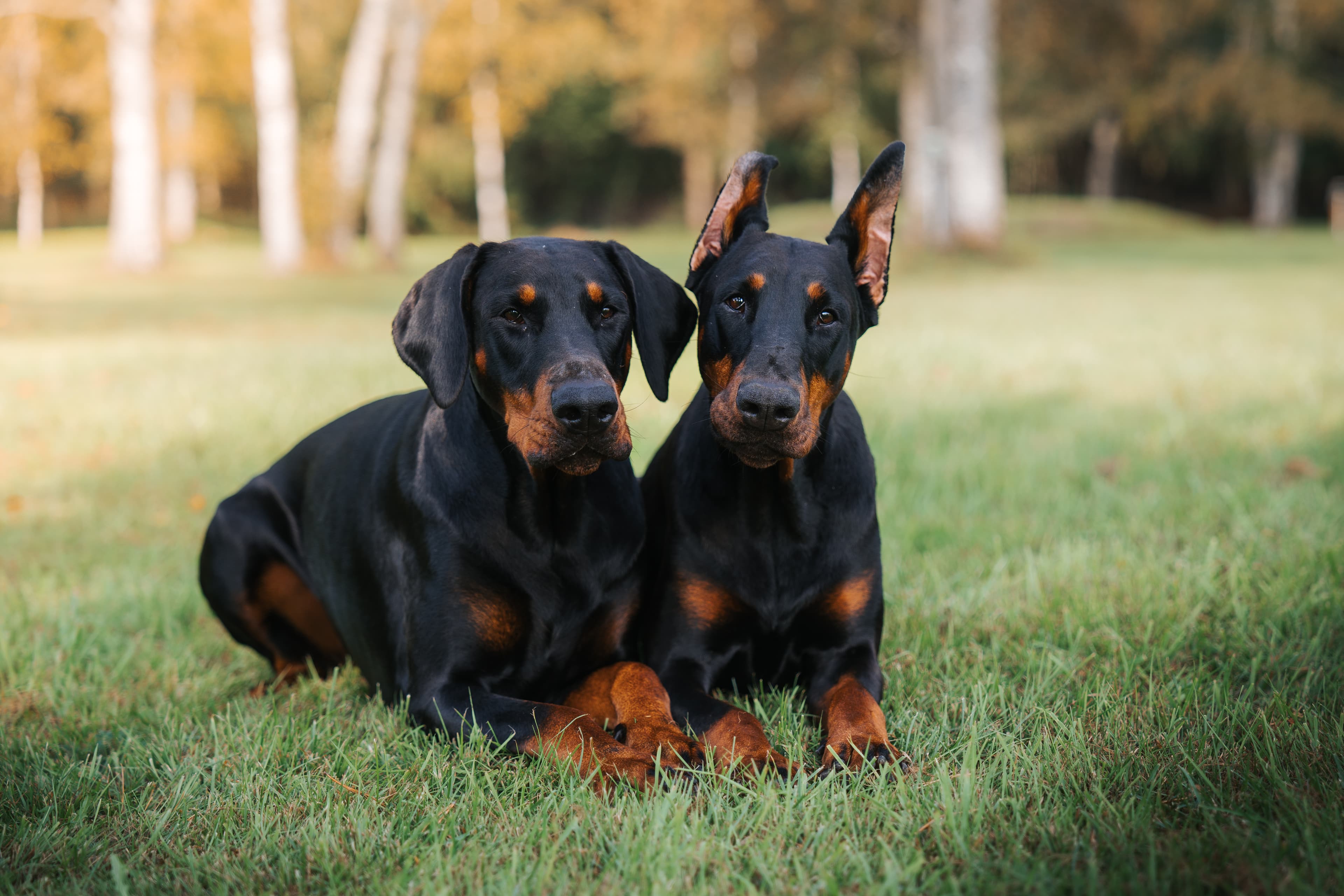
The Dobermann
The Dobermann is one of the most recognizable working breeds in the world — sleek, athletic, and known for a rare combination of intelligence, loyalty, and fearless protective instinct. Elegant in appearance yet formidable in function, the breed has earned a reputation as both a devoted family companion and one of the most capable working dogs in existence.
Breed History
The breed's origins trace back to Apolda, in the German state of Thuringia, in the 1880s. Karl Friedrich Louis Dobermann, a local tax collector, night watchman, and dog pound operator, wanted a dog that could protect him on his rounds, since he often carried large sums of money. Selecting from the dogs that passed through the pound, he began breeding for loyalty, alertness, and courage.
After his death in 1894, other breeders continued refining the line, and the breed was officially named in his honor. The exact ancestral mix was never fully documented, but it's believed to include the old German Shepherd, Rottweiler, German Pinscher, Weimaraner, and possibly the Greyhound and Manchester Terrier. The German Kennel Club recognized the breed in 1899, followed by the AKC in 1908.
By the early 20th century, Dobermanns had spread across Europe and the United States, serving as police dogs, military dogs — notably as the official war dog of the U.S. Marine Corps in the Pacific during World War II — and personal guardians.
Physical Characteristics
Dobermanns have a compact, muscular, square-proportioned body built for speed and endurance rather than bulk. Males stand roughly 68–72 cm at the shoulder and weigh 40–45 kg; females are somewhat smaller, around 63–68 cm and 32–35 kg.
The coat is short, smooth, and close-fitting, in black, red, blue, or fawn, each with rust-colored markings above the eyes, on the muzzle, throat, chest, legs, and below the tail. The head is long and wedge-shaped, with almond-shaped eyes that give a confident, alert expression.
Temperament and Behavior
Dobermanns consistently rank among the most intelligent dog breeds and excel in obedience and working trials. They form close bonds with their families and are often described as shadowing their owners closely, earning the nickname 'velcro dogs.'
Key traits include high trainability, a strong protective instinct without indiscriminate aggression when well-socialized, and keen situational awareness. They are sensitive to tone and respond best to firm, consistent, positive training rather than harsh correction. Early socialization is essential, as an under-socialized Dobermann can become overly wary of strangers.
Care and Health
This is a high-energy working breed that needs substantial daily exercise — ideally 60–90 minutes combining physical activity with mental engagement such as obedience work or scent games. Underexercised Dobermanns can become anxious or destructive.
The breed is predisposed to several serious health conditions that responsible breeders screen for, including dilated cardiomyopathy (DCM), von Willebrand's disease, hip and elbow dysplasia, and cervical vertebral instability, sometimes called Wobbler syndrome. Regular veterinary checkups, cardiac screening, and a balanced diet are key to a long, healthy life.
Conclusion
The Dobermann is a noble, highly intelligent, and trainable breed, ideal for active owners seeking a loyal, protective companion. With proper care, socialization, and exercise, they become deeply devoted and affectionate members of the family.
Source: Doberman Pinscher Dog Breed Information – American Kennel Club ↗